
Review · NEW YORK CITY
Private Broadway Studio Tour in New York City
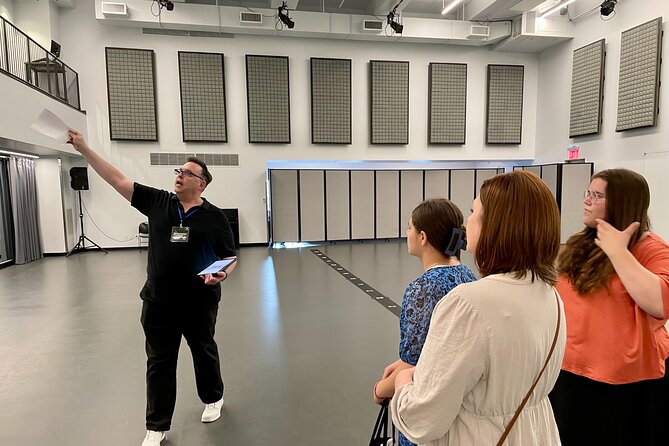
Broadway magic starts long before the curtain rises. At Open Jar Studios, you get a look at the working rooms where shows are written, shaped, cast, and rehearsed. The tour covers rare theatrical artifacts, including set models and original audition materials, and may let you peek inside an actual rehearsal room.
I like the private format, since your group can ask questions without keeping up with a large crowd. I also like the practical focus on how a musical gets made, rather than a simple tour of a building. The main limitation is time: at about 45 minutes, this is a compact introduction, not a full backstage visit.
Key points about the Open Jar Studios tour
- See a working Broadway rehearsal studio: Open Jar Studios has been used for the rehearsal and development of Broadway productions.
- Learn how shows take shape: The guide explains writing, casting, producing, and the development process.
- View unusual theater material: Set models and original audition materials give the visit a more personal feel.
- Possible rehearsal-room peek: The tour may include a look inside an actual rehearsal room, depending on access at the time.
- Private questions and flexible pacing: Only your group takes part, allowing more room for discussion.
- Short, central New York stop: The meeting point is 1601 Broadway, near public transportation, with mobile ticketing.
Inside the Broadway process at 1601 Broadway
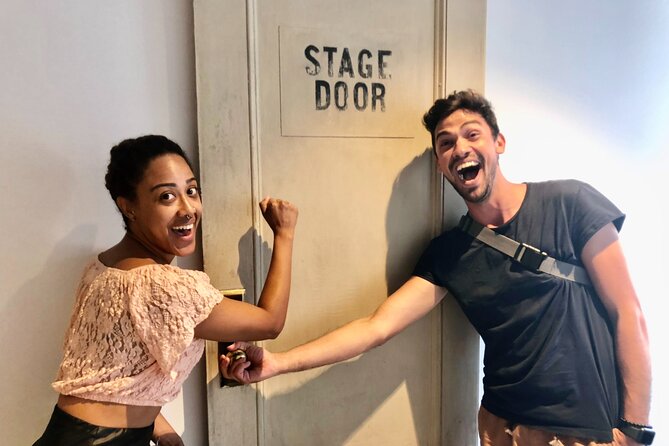
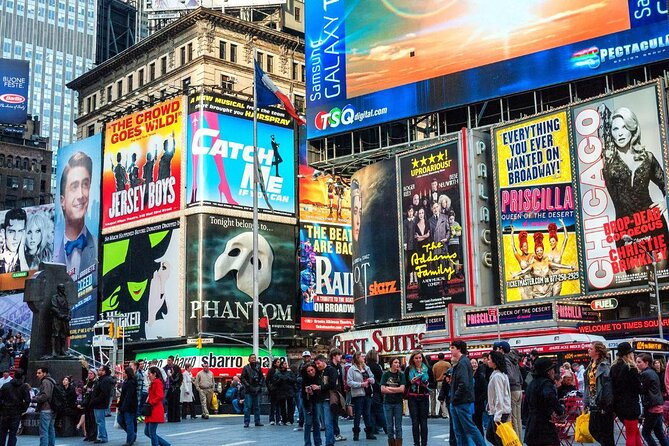
The first useful fact about this experience is its setting. You are not touring a theater auditorium after the show has finished. You are entering an artistic workspace tied to the earlier stages of Broadway production.
Open Jar Studios is a place where productions can be developed and rehearsed. That gives the visit a different focus from a standard theater tour. You learn what happens before scenery reaches the stage, before costumes are finished, and before an audience sees the first public performance.
The guide explains how a musical moves from an idea toward production. That can include writing the show, shaping scenes and songs, finding the right performers, and preparing the work through rehearsal. For anyone who enjoys theater, this process is often just as interesting as the final performance.
I especially like that the tour does not treat Broadway as a magic trick. It shows the many working parts behind the illusion. A successful show depends on writers, producers, directors, performers, designers, casting teams, and rehearsal staff. The visit gives you a way to connect those jobs to a real place.
The core experience is described as about 30 minutes, while the overall activity lasts approximately 45 minutes. That difference likely allows time for arrival, movement through the studio, questions, and the changing conditions of a working facility. You should plan for the longer estimate so you are not rushing to your next New York activity.
More Film Studio Tours in the USA
- NYC: Broadway Secrets & Behind-the-Scenes Studio Tour
★ 4.6 · 86 reviews - Los Angeles: Warner Bros. Studio Tour Hollywood
★ 4.6 · 7,191 reviews - Warner Bros. Studio Tour Hollywood
★ 4.5 · 5,246 reviews
What you see at Open Jar Studios
The tour begins at 1601 Broadway, New York, New York 10010. The activity returns to this same meeting point, so you do not need to arrange a separate pickup at the end.
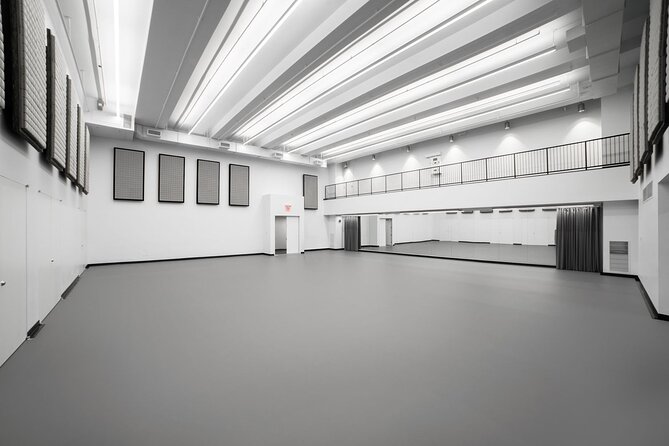
The studio itself is the central attraction. You get a rare look at a place used for the artistic work behind Broadway productions. The appeal is not polished decoration. It is the chance to see the sort of space where creative decisions are tested and revised.
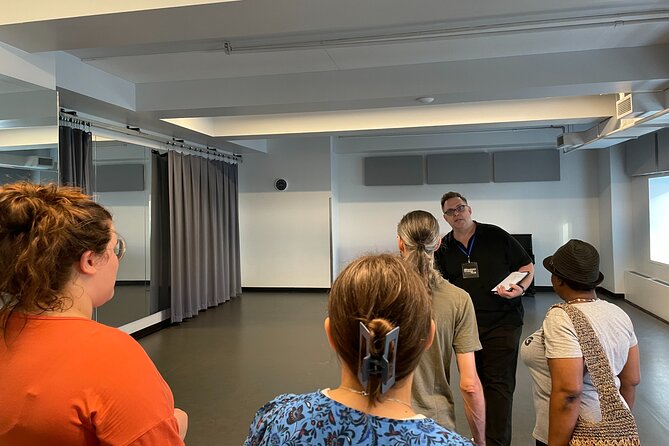
Access inside a working studio can vary. The experience includes the possibility of peeking into an actual rehearsal room, but that access is not presented as guaranteed. A rehearsal may be taking place, a room may be in use, or studio operations may limit what you can see on a particular visit.
That uncertainty is worth understanding before you book. If your only goal is to enter a specific rehearsal room, this may not be the right activity. If you want a broader picture of how Broadway shows are developed, the studio setting remains valuable even if a room is unavailable.
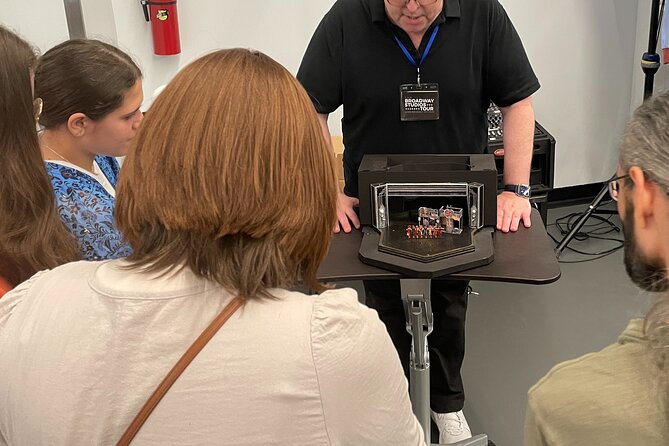
You also get a look at theatrical artifacts. These include set models and original audition materials. Set models help you see how designers think about scale, movement, and the visual world of a production. Audition materials offer a more direct connection to the casting process, showing that performers must first pass through a careful selection stage before rehearsals begin.
These objects make the talk more concrete. Instead of hearing only general comments about theater production, you can connect the explanation to physical items tied to the work.
Stories from people who make Broadway shows
The experience is led by a member of the theatrical industry. That matters because the tour is meant to include direct insight, not just a memorized account of Broadway facts.
One guide named in the tour feedback is Hugh. His style was described as engaging, entertaining, and suitable for young theater fans. If Hugh leads your visit, you can expect plenty of anecdotes alongside the basic explanation of how shows are made. The tour provider may assign a different theater professional, so the exact guide is not guaranteed.
The strongest part of a guide-led studio visit is the chance to ask about the small decisions that rarely appear in a program or newspaper article. You can ask how a show develops, how casting fits into the process, or why rehearsal is essential before a production reaches Broadway.
Because the activity is private, your questions can shape the conversation. A group of theater students might want to discuss auditions and casting. A family might focus on how a musical changes from an early idea into a finished production. A Broadway fan may prefer stories about the development of particular shows.
The private arrangement does not mean you should expect an unlimited personal consultation. The visit is short, and the guide still needs to cover the main material. But compared with a large group, your time is more likely to feel focused and conversational.
Why the artifacts matter
The set models and audition materials are not just display pieces. They show the practical work behind a finished production.
A set model can help you understand that stage scenery begins as a plan. Designers must consider the size of the stage, how performers move, where scenes change, and how the visual design supports the story. Seeing a model gives you a smaller, clearer view of decisions that can look effortless once the set is full size.
Original audition materials point to another part of the process. Broadway casting is not simply a matter of choosing someone who can sing or act. Performers must fit the needs of a role and the overall production. Audition material offers a glimpse into the early stage where those choices begin.
The collection is described as rare, which adds interest for serious theater fans. Still, the available information does not specify exactly which productions the artifacts come from. You should treat the material as an informative selection, not expect a guaranteed display connected to one particular musical.
This is also why the tour works for people who have already seen many Broadway shows. You are not being asked to watch another performance. You are looking at the decisions and paperwork that help create one.
More Film Studio Tours in New York City:
- From London: Harry Potter Warner Bros Studio Tour
★ 4.7 · 26,588 reviews - Harry Potter: Warner Bros. Studio Tour from King’s Cross
★ 4.7 · 6,442 reviews - London: Warner Bros. Studio Tour with Return Transportation
★ 4.7 · 5,752 reviews - London: Harry Potter Studio Tour and Oxford Day Trip
★ 4.7 · 5,098 reviews
The possible rehearsal-room peek
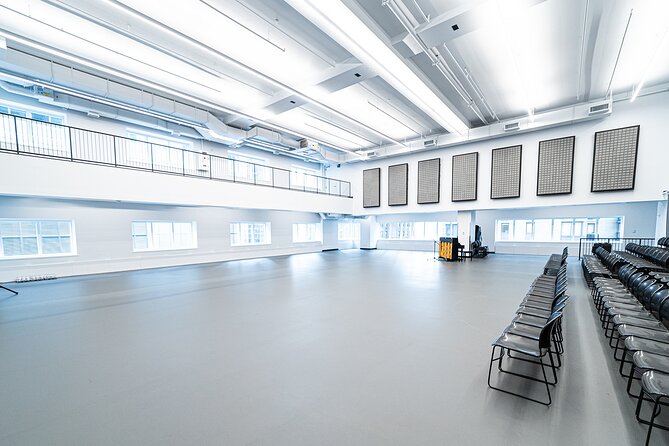
The chance to see an actual rehearsal room is one of the most appealing parts of the visit. A rehearsal room is where performers and creative teams can test scenes, movement, music, and staging before the work reaches an audience.
Even a brief look can change how you watch a Broadway show later. You may think more about how performers learn blocking, how scenes are adjusted, or how a production team turns an idea into something repeatable night after night.
The wording matters, though. You may be able to peek inside a rehearsal room, but access depends on what is happening at the studio. This is an active workplace, not a museum arranged for tours. Respect for rehearsals and privacy comes first.
I would book this experience for the story and studio access as a whole, with the rehearsal-room view treated as a welcome extra. That approach gives you a better experience and avoids disappointment if the room cannot be entered.
Who will get the most from this tour
This tour is a strong match for people who already love Broadway, musical theater, acting, directing, or stage design. It is also well suited to families with young theater fans, particularly if children enjoy hearing stories from someone who works in the field.
The private setting can help school groups or small family groups get more from the guide. You can pause for questions instead of listening to a one-size-fits-all speech.
The tour may be less satisfying if you want a long, highly detailed technical tour. It does not promise a look at every department, costume shop, backstage corridor, or performance venue. Its focus is the development process at a Broadway studio.
It is also not a substitute for seeing a show. You will learn about Broadway production, but you will not watch a musical performance as part of this activity. Consider pairing it with a Broadway ticket if theater is the main reason for your New York visit.
Price, timing, and practical value
At $26 per person, the experience is reasonably priced for a private, theater-focused activity in central New York. The value depends on how much you want to understand the work behind Broadway rather than simply see a famous theater from the outside.
A regular attraction often gives you a fixed display and a set route. This tour adds a working studio, a theater professional, questions, artifacts, and the possibility of seeing an active rehearsal room. Those elements make the price more appealing for theater fans.
The short duration also helps your schedule. At approximately 45 minutes, you can fit the visit between other Midtown plans. The meeting point at 1601 Broadway is near public transportation, which makes it easier to reach from other parts of New York City.
This is not a full-day activity, and the price should be judged accordingly. You are paying for a focused introduction to Broadway production, not hours of access or a complete studio visit.
The tour is often booked about 27 days in advance. That pattern suggests you should reserve ahead if your New York dates are fixed, especially if you need a particular day. A mobile ticket makes entry simpler, since you can keep the booking on your phone.
Free cancellation is available if you cancel at least 24 hours before the start time. Changes made less than 24 hours ahead are not accepted, and the payment is not refunded in that case. The activity also requires a minimum number of participants, so a provider cancellation for that reason would result in another date or experience, or a full refund.
Service animals are allowed, and most people can take part. The activity is near public transportation, but the available details do not describe every physical feature of the studio, so contact the provider if you need specific access information.
How to make the most of the 45 minutes
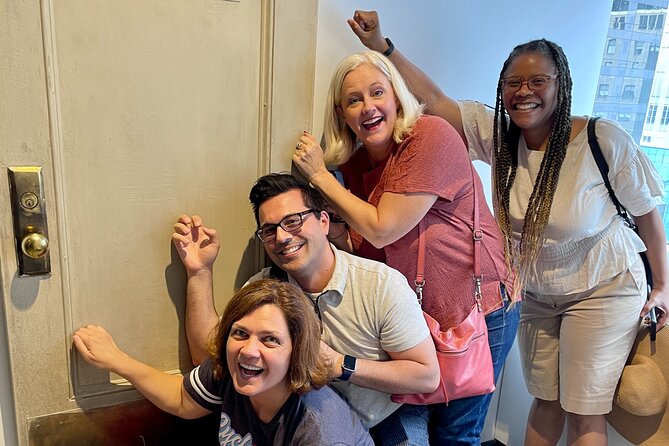
Arrive ready with a few questions. The private format gives you a chance to make the visit more useful, and a focused question can lead to a better story than a general request for facts.
You might ask how a musical changes during development, how casting decisions affect rehearsal, or what set models reveal about the final design. If you are visiting with children, ask them to think about everything that must happen before a show can open.
Keep your expectations flexible about photography and room access. The supplied details do not promise either, and a working studio may have rules that change from one visit to the next.
Allow a little extra time around the stated duration. The main experience is described as 30 minutes, while the full activity is about 45 minutes. You should not schedule another appointment so tightly that a few extra minutes create a problem.
Should you book the Private Broadway Studio Tour?
Book it if you want to understand how Broadway shows are built before opening night. The combination of a working studio, theatrical artifacts, industry stories, and a private guide gives you more substance than a simple photo stop in Midtown.
I would especially recommend it for theater fans, families with young performers, and anyone curious about writing, casting, producing, or stage design. Hugh has been praised for making the visit engaging for young theater fans, though the guide for your date may differ.
Skip it if you need guaranteed access to a rehearsal room, a long technical tour, or a performance. The room peek is only a possibility, and the visit is brief.
At $26, the tour offers solid value when you treat it as a compact, personal look at Broadway’s creative work. It will not show you every corner of the theater world, but it can help you watch your next musical with a better sense of everything that happened before the curtain went up.
FAQ
Where does the Private Broadway Studio Tour begin?
The tour begins at 1601 Broadway, New York, NY 10010, USA.
Where does the tour end?
The activity ends back at the meeting point.
How long does the tour last?
The experience lasts approximately 45 minutes. The main studio experience is described as about 30 minutes.
How much does the tour cost?
The listed price is $26 per person.
Is the tour private?
Yes. Only your group takes part in the activity.
Is a mobile ticket available?
Yes. The experience includes mobile ticketing.
What will I learn during the tour?
You will learn about writing, developing, producing, and casting Broadway shows, along with the rehearsal process.
Will I see an actual rehearsal room?
The tour includes the possibility of peeking inside an actual rehearsal room. Access is not guaranteed.
What theatrical items can I see?
The tour includes rare Broadway artifacts such as set models and original audition materials.
Can I cancel for a refund?
Yes. You can cancel for a full refund up to 24 hours before the experience starts. Cancellations or changes made less than 24 hours before the start time are not accepted for a refund.
Newly added screen tours around New York City
- Elf and Home Alone 2 Movie Locations Tour in Central Park★ 5.0 · 54 reviews
- SUCCESSION Walking Tour of Downtown Manhattan Filming Locations★ 5.0 · 3 reviews
- SUCCESSION Walking Tour of Uptown Manhattan Filming Locations★ 5.0 · 2 reviews
- NYC Movie & TV Location Running Tour – Jog Iconic Filming Spots★ 5.0 · 2 reviews
- SUCCESSION Walking Tour – Uptown & Downtown NYC Filming Locations★ 5.0 · 21 reviews
- Self Guided “Central Park Movie Tour” Solo Walking Tour in New York City★ 4.5 · 2 reviews
- Harry Potter Shop New York- Fly a Broomstick Experience★ 3.5 · 10 reviews
- Harry Potter and the Cursed Child on Broadway Ticket★ 4.0 · 53 reviews
Film Studio Tours in the USA: how the tours compare.

Los Angeles: Warner Bros. Studio Tour Hollywood
Read our review →

Universal Studios Hollywood General Admission Ticket, California
Read our review →
Skip the Line: Express Ticket at Universal Studios Hollywood
Read our review →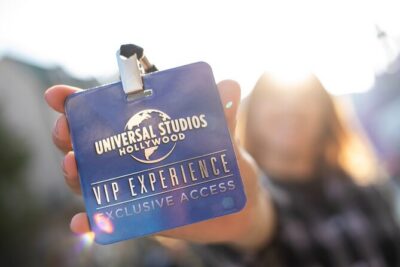
The VIP Experience at Universal Studios Hollywood in California
Read our review →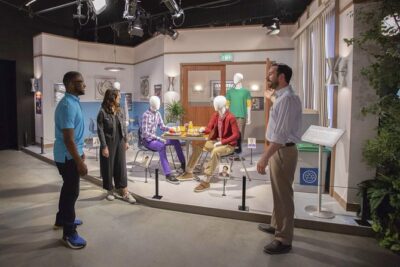
Warner Bros. Studio Tour & Celebrity Homes Tour Package
Read our review →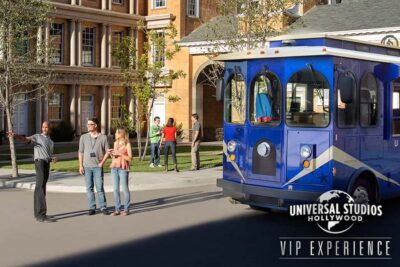
Universal Studios Hollywood: VIP Tour with Ticket
Read our review →
Universal Studios Hollywood: Halloween Horror Nights
Read our review →Find this tour on these lists