
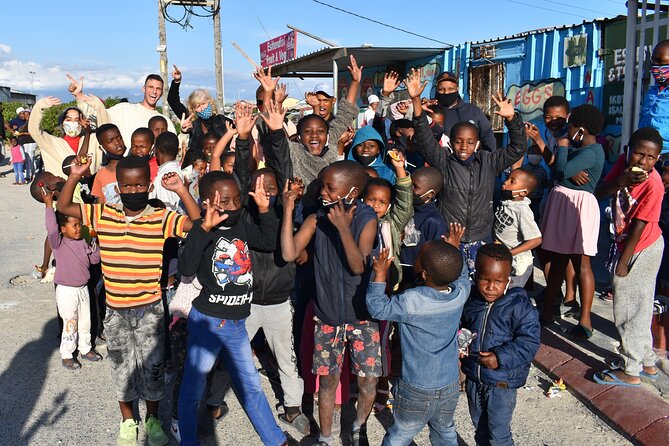
Review · SOUTH AFRICA
Pop-Up Cinema in the Community + Post Film Discussion with Locals
Cape Town’s tourist trail rarely shows you how one young Khayelitsha entrepreneur uses film to create a safe place for learning and fun. Here, Buhle runs mobile screenings while funding the work through a garbage-bin cleaning service. Guide Jason leads the conversation, then helps you understand the films and the setting.
I like the small group size, capped at 10, and the honest link between the ticket and local work. I also like the format: interview, questions, a short walk, three films, and discussion. The main consideration is that this is a community meeting point experience, not a polished cinema attraction, and the exact mix of local participants can vary.
Key points to know before booking

- Meet changemaker Buhle: Hear how he supports film screenings through a separate garbage-bin cleaning service.
- Three locally produced films: The program includes The Rise of Shembe, Scapegoat, and Amalobolo.
- Discussion is central: You do not simply watch films and leave. Each short film leads into a group conversation.
- Small, guided format: The group is limited to 10, with Jason facilitating from pickup, if selected, through the experience.
- Optional extras: Hotel pickup, a meal, and a same-day photoshoot are available only with selected booking options.
- A direct local contribution: Ten percent is pledged to charity, with further support for changemakers provided through equipment, bursaries, and cash grants.
Why a pop-up cinema tells you more than a standard tour
The special idea here is simple: film becomes a reason for people to gather. Instead of looking at Khayelitsha from a passing vehicle or hearing a short history talk, you spend time with a local person who is actively building something for his community.
Buhle’s work has two parts. He sets up mobile screenings to inspire and educate local children and residents, and he runs a garbage-bin cleaning service to raise money for hall rental and snacks. That detail matters because it shows the practical side of community work. This is not just a feel-good story about an ambitious young person. It is also about finding workable ways to keep a project going.
The ticket includes a 10 percent charitable pledge, and the wider Side by Side model directs year-end support toward equipment, bursaries, and cash grants for its changemakers. You should not treat the admission fee as a direct donation to one specific project, but the social purpose is built into the experience.
I find the format more useful than a quick photo stop because it gives you time to listen. Jason first interviews Buhle, then opens the floor for your questions. That structure gives you a clear path into Buhle’s story without turning the meeting into a lecture.
More screen tours worth booking around the world:
- From London: Harry Potter Warner Bros Studio Tour
★ 4.7 · 26,588 reviews - Magical London: Harry Potter Guided Walking Tour
★ 4.7 · 22,044 reviews - London: Warner Bros. Studio Harry Potter Tour & Branded Bus
★ 4.7 · 19,194 reviews
Meeting Jason and hearing Buhle’s story
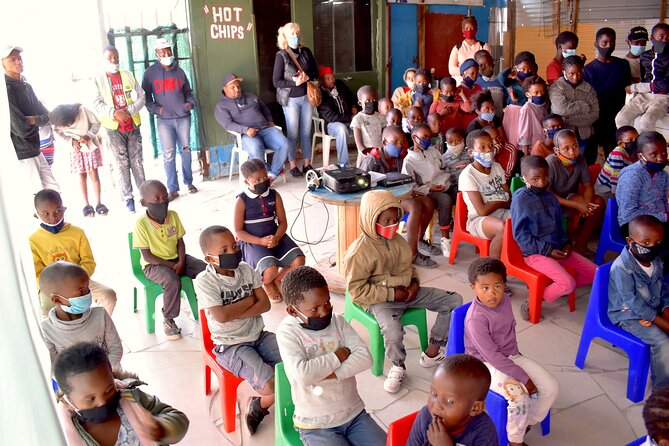
The experience begins at Bengezela Street in Harare, Cape Town, 7784. If you select the hotel pickup option, a Side by Side guide accompanies you from pickup to drop-off and handles background information and entrance fees. The bare-bones option does not include the add-ons, so check your selected package before assuming transport is included.
The opening interview lasts about 30 minutes. Jason asks Buhle about his work, his choices, and the reasons he began hosting screenings. The setting gives the conversation a personal edge. One of the most memorable parts is the connection to the home where Buhle grew up, including his mother’s home, which has been part of the welcome for some groups.
You should expect a conversation rather than a formal presentation. Buhle is a young social entrepreneur with a personal story shaped by both difficult moments and determination. The point is not to turn his life into a tourist spectacle. It is to understand how a local resident has chosen to use film, discussion, and small business to support people around him.
This first section is also where Jason’s role matters. He is not only handling logistics. He helps frame the questions and gives you enough context to follow the conversation. His facilitation keeps the meeting moving while allowing Buhle’s own voice to lead.
Fifteen minutes for your questions
After the interview, you have about 15 minutes for questions. This is a useful part of the schedule because it gives you permission to ask about the practical details that a prepared talk might skip.
You can ask about the films, the screening setup, the cleaning service, or the reasons Buhle focuses on young people and community learning. You may also find that the group’s questions shape the rest of the experience. With a maximum of 10 people, the exchange should feel more personal than a large coach tour, though the amount of discussion will naturally depend on the group.
I would arrive with one or two thoughtful questions. Ask how a mobile cinema chooses its films, what makes a screening work in a local hall, or how Buhle balances the social project with paid work. Questions like these help move the conversation beyond general praise.
The short walk to the screening venue
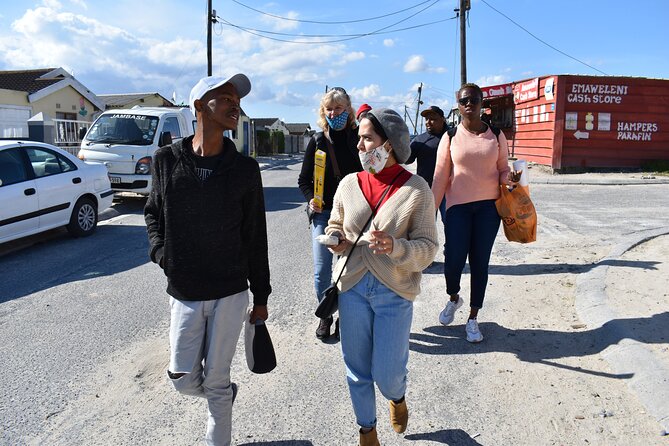
The walk to the film venue takes about 15 minutes. It is short enough to fit comfortably into a three-hour program, but it also marks a change in pace. You are leaving the interview setting and moving toward the place where the project actually operates.
Do not expect a major cinema complex. The appeal is the pop-up nature of the screening. Buhle rents halls when he can, buys snacks, and brings films to the community. The venue may feel more like a borrowed neighborhood space than a formal theater, which is part of the point.
A short walk also means you should wear comfortable shoes and keep your plans flexible. The supplied information does not promise a particular hall or fixed seating arrangement, so you should book this for the human exchange and film discussion, not for cinema-style comfort.
Same scenes, a different way to walk into them:
- Edinburgh: Harry Potter Magical Guided Walking Tour
★ 4.8 · 11,944 reviews - London: Warner Bros. Studio Harry Potter Tour with Transfers
★ 4.6 · 9,709 reviews - Hobbiton Movie Set: Guided Tour Ticket
★ 4.9 · 8,167 reviews - Los Angeles: Warner Bros. Studio Tour Hollywood
★ 4.6 · 7,191 reviews
Three short films with a conversation after each
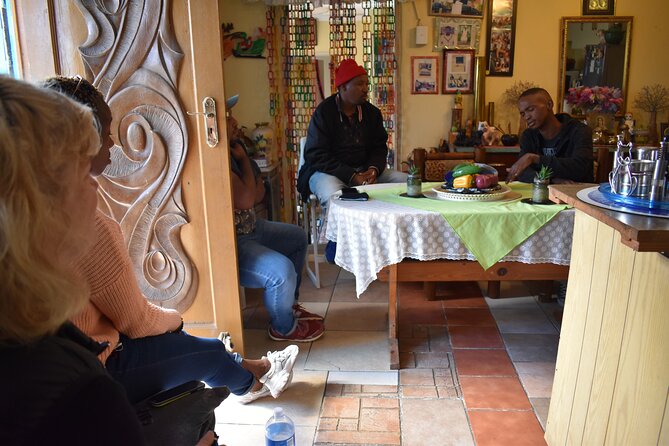
The screening lasts about 90 minutes and includes three locally produced short films:
- The Rise of Shembe
- Scapegoat
- Amalobolo
The films are not treated as background entertainment. The group discusses each one before moving to the next. That makes the program feel more like a community film club than a simple screening.
This structure is especially helpful if you do not know the local context. A short film can raise questions about belief, identity, blame, family, or social pressure without explaining every point directly. The discussion gives you a chance to hear how the subjects land with people connected to the area.
You should also be ready for different reactions. A locally produced film may be direct, personal, or unfamiliar in tone. The value comes from the exchange around it, not from expecting a polished commercial production. If you prefer a quiet, passive movie night, this may feel more interactive than you want. If you like asking questions and comparing viewpoints, the format is a strong fit.
The activity description says adult neighbors are the standard local community members who may join. Children may only be present on weekend bookings and must be requested in advance. That distinction is useful. You should not book expecting a room full of children or a children’s entertainment session.
The welcome matters as much as the screening
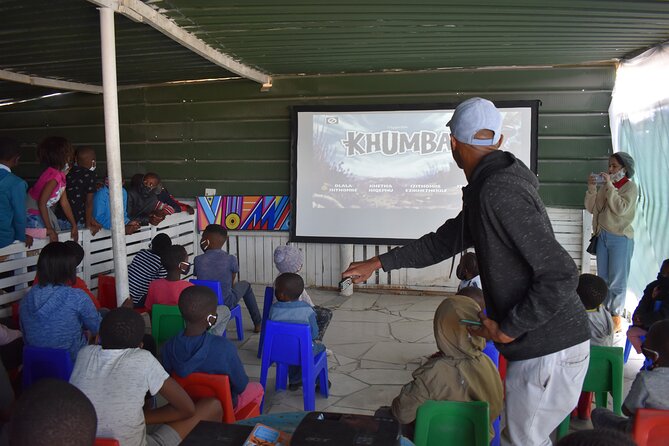
A strong part of the experience is the sense of welcome. Buhle’s project is tied to his own neighborhood and personal history, not a generic performance created for visitors. Meeting him in the place where he grew up gives the conversation a grounded quality.
That does not mean you should expect a private home visit every time. The details supplied indicate that some groups have been welcomed into his mother’s home, but the fixed program is the interview, walk, screening, and discussion. Treat the home setting as a possible part of the welcome rather than a guaranteed stop.
The same applies to local participation. Adult neighbors are part of the standard setup, while children may be involved only on request during weekend bookings. Ask at booking if the presence of children is important to your decision.
The farewell section lasts about 15 minutes. It gives you time for natural conversation and goodbyes rather than ending the film discussion abruptly. Since the experience returns to the meeting point, you can continue with your Cape Town plans afterward.
What the $29.38 price gives you
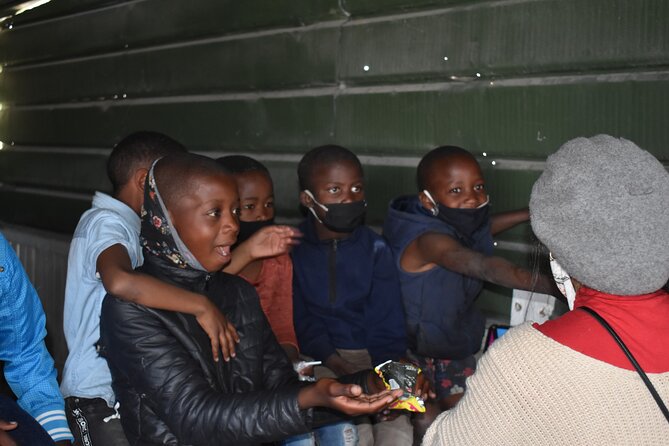
At $29.38 per person, this is not priced like a basic movie ticket. You are paying for roughly three hours of guided interaction, a local host, a facilitator, a screening program, and the chance to take part in a small community-based project.
The value depends on what you want from Cape Town. If your priority is famous sights, this will not replace Table Mountain, the waterfront, or a major museum. If you want a personal encounter that connects entertainment with local enterprise, the price is easier to justify.
The ticket includes the admission, the tour guide or experience facilitator, and the 10 percent charitable pledge. Bottled water is not included, though you can buy it for cash from your guide. Add-ons such as hotel pickup, a meal, and the photoshoot are not part of the bare-bones option.
The optional photoshoot is a practical extra for people who want HD photos or videos sent by Google Drive the same day. I would consider it only if documenting the experience matters to you. The basic program already has enough substance without adding extras.
Group size, pickup, and timing
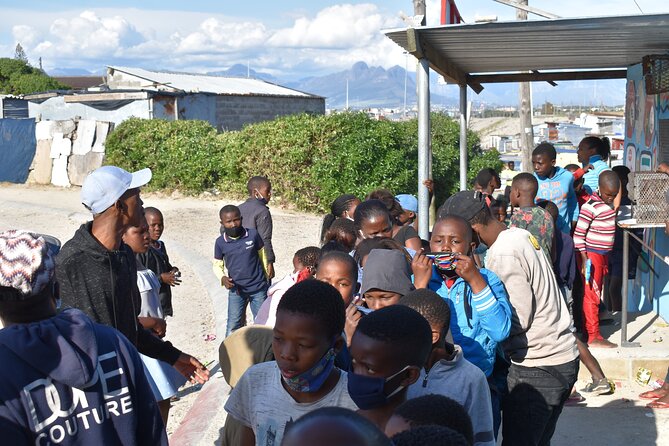
The experience lasts about three hours. The schedule is tight but clear:
- 30 minutes for the interview
- 15 minutes for guest questions
- 15 minutes walking to the venue
- 90 minutes for the films and discussions
- 15 minutes for interaction and goodbyes
The listed times add up to just under three hours, so allow a little flexibility around the start and finish. This is especially sensible if you plan another timed activity afterward.
The group maximum is 10 people. That is one of the strongest practical reasons to choose this over a large city tour. A smaller group gives you a better chance to ask questions and take part in the film discussions, though no small-group format can guarantee equal conversation time for everyone.
Pickup is offered as an add-on rather than as a standard feature of every booking. If you choose it, the Side by Side guide stays with you from pickup to drop-off. If you choose the basic option, you should plan to reach Bengezela Street on your own.
The activity ends back at the meeting point. A mobile ticket is provided, and confirmation is received at booking.
What to consider before you go
This experience requires good weather. If poor weather causes cancellation, you are offered another date or a full refund. It also requires a minimum number of participants, so a cancellation for that reason brings the same choice of a different date or a refund.
Most people can participate, but the program includes a short walk. You should also be comfortable entering a community setting and taking part in conversation. This is not a sightseeing route with constant movement or a formal theater performance with a silent audience.
Bring an open mind and a few questions. Since bottled water is available for cash purchase, carrying some local currency is sensible if you want to buy one from the guide. The supplied information does not specify a dress code, age limit, or detailed accessibility arrangements, so ask the operator directly if you have a particular mobility or access need.
Cancellation is free up to 24 hours before the local start time. Within 24 hours, the payment is not refunded and changes are not accepted.
Who will enjoy this most
I would recommend this to you if you want a more personal side of Cape Town and enjoy hearing directly from people who are working on local projects. It suits curious adults, socially minded visitors, and anyone who prefers a discussion to a quick stop for photographs.
It is also a good choice if you want to support a small local initiative without spending a full day on a formal volunteer project. You get a defined three-hour activity, a clear host, and a chance to see how a social project operates.
Families should check the child participation detail carefully. Children from the community are only possibly present when requested for weekend bookings, so the normal experience is built around adult neighbors. The program can still be meaningful for families, but it is not advertised as a children’s activity.
You may want to skip it if you need guaranteed transport, a fixed professional cinema venue, or a tightly controlled schedule. You may also find the discussion-heavy format less appealing if you prefer sightseeing without personal questions or local conversation.
Should you book the Khayelitsha pop-up cinema?
Book it if you want to meet Buhle, hear how a young entrepreneur funds community screenings, and discuss locally produced films with people connected to the area. The small group, personal interview, and social purpose give the experience a clear identity.
I would choose the basic option if you are already nearby and mainly want the conversation and screening. Add pickup if reaching Bengezela Street is difficult, and consider the photoshoot only if same-day images matter to you.
The best reason to go is not the promise of a perfect movie night. It is the chance to see how a simple pop-up cinema can become a place for learning, laughter, and local connection. For that kind of Cape Town experience, $29.38 is a fair price.
FAQ
Where does the experience start?
It starts at Bengezela Street, Harare, Cape Town, 7784, South Africa.
Where does the experience end?
The activity ends back at the meeting point.
How long does the experience last?
It lasts approximately three hours.
What films are shown?
The program includes The Rise of Shembe, Scapegoat, and Amalobolo.
Who hosts the experience?
Buhle is the changemaker host who runs the mobile screenings. Jason facilitates the experience and interviews Buhle.
How many people can join?
The experience has a maximum of 10 travelers.
Is hotel pickup included?
Pickup is offered, but it is an add-on. The bare-bones option does not include add-ons.
Are meals included?
A meal is available only with selected options that include that add-on. It is not included in the bare-bones option.
Will children from the community be present?
Local children may be present upon request for weekend bookings. Adult neighbors are the standard community participants.
Can I cancel for a full refund?
Yes. You can cancel at least 24 hours before the local start time for a full refund. Cancellations or changes made less than 24 hours before the start are not refunded or accepted.
Newly added screen tours around the world
- York: Game of Thrones Walking Tour★ 5.0 · 2 reviews
- Zion: Harry Potter-Inspired Zion Ghost Tour with Sunset View★ 5.0 · 8 reviews
- Wellington: Lord of the Rings Half-Day Guided Tour inc Weta★ 5.0 · 5 reviews
- Skopelos Island: Mamma Mia Filming Locations Tour★ 4.9 · 32 reviews
- Volcano Movie – Experience the Latest Eruptions in Iceland★ 3.6 · 3 reviews
- Wellington: Half-Day Lord of the Rings Locations Tour★ 4.8 · 10 reviews
- Movie World, Sea World, & Wet’n’Wild Multi Park 1-Day Pass★ 4.1 · 4 reviews
- Virtual reality movie – experience I AM LITHUANIA★ 4.4 · 5 reviews