
Review · FRANCE
Paris: a movie tour in Montmartre inspired by Amélie Poulain
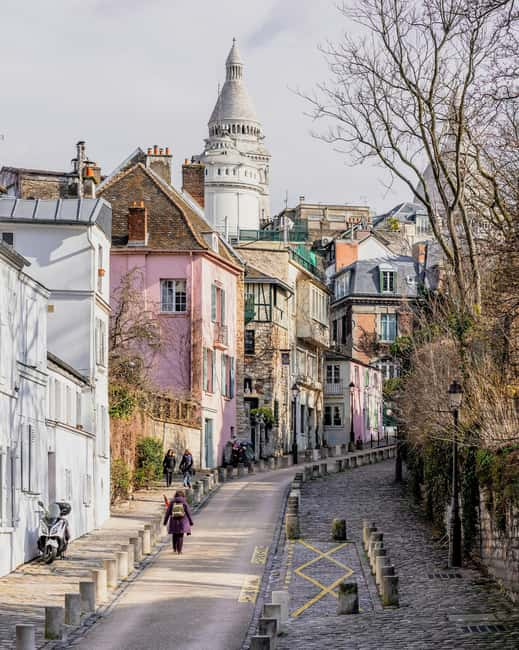
Montmartre is already one of Paris’s best walking districts. Add Amélie, a tablet full of film clips, and a guide who can explain how the neighborhood has been used by French and American directors, and the familiar streets take on a new purpose. This 150-minute walk begins at Lamarck-Caulaincourt and climbs toward Sacré-Coeur, mixing movie locations with cabarets, artists’ landmarks, and quiet corners.
I like the way the tour connects films to the actual streets instead of treating cinema as a separate subject. I also like the small group limit of 10, which should make it easier to see the tablet and ask questions. The main drawback is the uphill route, with several stops on cobbled or sloping streets, so it is not a good fit if you have limited mobility.
Key points at a glance
- Amélie locations: Follow the film from Lamarck-Caulaincourt to the grocery, garden, Sacré-Coeur, and other Montmartre settings.
- Films beyond Amélie: Learn about An American in Paris, Funny Face, Ratatouille, La Vie en Rose, A Monster in Paris, John Wick 4, and Emily in Paris.
- Tablet-based storytelling: Your guide uses pictures and film clips to show how scenes relate to the places around you.
- Classic Montmartre sights: See Lapin Agile, the vineyard, Place du Tertre, La Maison Rose, Moulin de la Galette, and Sacré-Coeur.
- Cinema and local life: Hear about French cinema, American film, artists, cabarets, and the people who shaped Montmartre.
- Useful practical detail: The tour costs $23 per person, lasts 2.5 hours, and is offered in English or French.
Why Amélie works so well in Montmartre
Amélie is not just a film set in Paris. It uses Montmartre’s stairways, cafés, small shops, painted walls, and odd little corners as part of the story. The neighborhood feels like a character, and this tour gives you a way to read those streets through the film.
Your guide starts with one of the film’s locations near Lamarck-Caulaincourt. From there, you walk uphill at a steady pace, stopping to compare the real place with images and clips on a tablet. This is useful because movie locations can be surprisingly ordinary when you see them without lighting, actors, or camera angles. The visual comparison helps you notice what the director changed and what was already there.
The focus stays on Amélie, but the tour does not stop there. Montmartre has appeared in French and American films for decades, and the route brings in examples such as An American in Paris from 1951, Funny Face from 1957, Ratatouille, La Vie en Rose, A Monster in Paris, John Wick 4, and Emily in Paris. That gives the walk more range than a single-film location hunt.
I especially like this approach if you enjoy films but do not want a lecture disconnected from the city. You get cinema stories, but you also learn how Montmartre developed, why artists gathered here, and how the neighborhood became such a powerful image of Paris.
More screen tours worth booking around France:
- Behind the Scenes of the Grand Rex: 50-Minute Studio Tour
★ 4.6 · 1,138 reviews - Paris: Emily TV Show Locations Guided Walking Tour
★ 4.6 · 140 reviews - Paris Photo Session: Be the Star of Your Own Movie
★ 5.0 · 87 reviews
Starting at Lamarck-Caulaincourt
The meeting point is outside the metro entrance at Lamarck-Caulaincourt. This is a practical starting point because you begin away from the heaviest crowds around Sacré-Coeur and move into the hill gradually.
The opening location connects directly to Amélie. Your guide sets the film’s mood here, then uses the tablet to show images and clips as you walk. The tablet matters more than it might sound. A still photograph can point out a doorway or street angle that you would otherwise pass without noticing.
The tour is offered in English and French. Juliette led the tour described in the supplied feedback, and her approach was praised for combining enthusiasm for French cinema with a strong grasp of Montmartre’s past. Her English was also described as very strong, which is useful if you are booking the English version and want detailed explanations rather than a simple list of filming spots.
Lapin Agile and the old cabaret world
Lapin Agile is one of Montmartre’s best-known cabarets, and the stop lasts about five minutes. It gives the walk an early taste of the neighborhood’s artistic past before the route reaches the famous basilica.
The value here is context. Montmartre is often reduced to painters in the Place du Tertre, but cabarets were just as important to its public image. Your guide links the place to cinema and to the artists who made Montmartre attractive to directors long before Amélie.
Five minutes is enough for an introduction, not a full visit. You should expect to view the exterior and hear the story rather than attend a performance or explore the interior. That is typical of this tour: it is a moving film-and-history lesson, not a series of inside visits.
The Clos Montmartre vineyard
The Vigne du Clos Montmartre is another brief stop, with about five minutes of guided explanation. A vineyard on a Paris hill may seem unexpected, which is exactly why it works well on a walking route.
Here, you get a reminder that Montmartre has retained traces of its village-like past even though it is part of central Paris. The stop also supports one of the tour’s larger ideas: film directors use Montmartre because it offers more than postcard views. It has narrow streets, old buildings, gardens, slopes, and small spaces that feel different from the grand boulevards elsewhere in the city.
Do not expect a wine tasting or a long garden visit. The vineyard is one stop within a packed route, and the focus remains on the relationship between place, art, and film.
Same scenes, a different way to walk into them:
- The force to escape – Escape game in Montpellier
★ 4.5 · 84 reviews - Paris: Emily Filming Locations Walking Tour
★ 4.9 · 80 reviews - Arromanches 360 Circular Cinema Entrance Ticket
★ 4.0 · 71 reviews - Paris: Explore the City Like Emily Tour – Filming Locations
★ 4.8 · 69 reviews
Sacré-Coeur and the climb
Sacré-Coeur gets around 10 minutes, one of the longer stops on the route. You will see the basilica as both a major Paris sight and a recurring film backdrop.
This part of the walk also makes the physical demands clear. The route goes uphill, and you should wear comfortable shoes and bring water. The tour is specifically not recommended for people with mobility impairments. Even if you walk regularly, the combination of slopes, stairs, and uneven streets can make the 2.5-hour outing tiring.
The payoff is the setting. Sacré-Coeur is one of Montmartre’s central visual anchors, and the tour places it inside the story of the films filmed on the hill. You are not simply checking off the basilica. You are learning why directors return to this part of Paris and how the view and architecture work on screen.
Place du Tertre and La Maison Rose
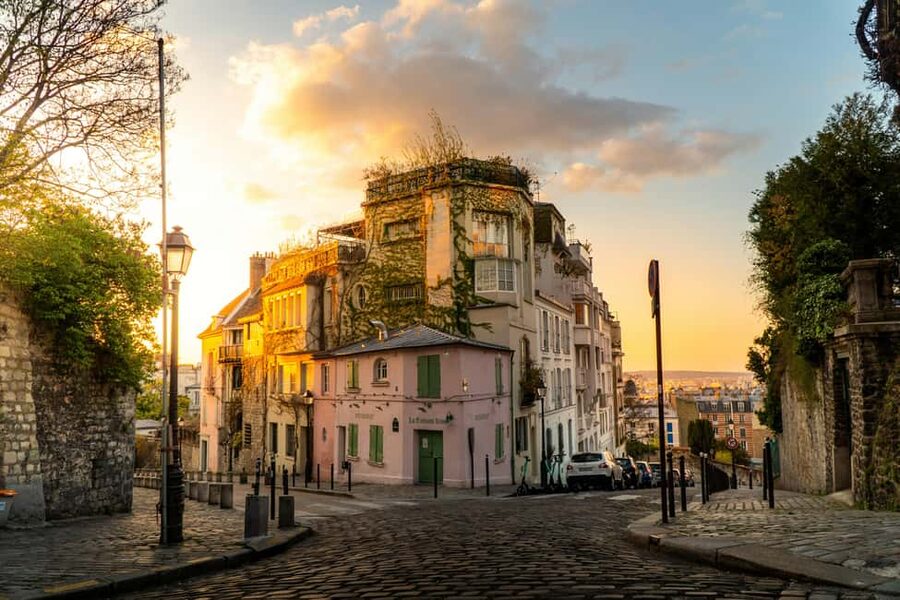
Place du Tertre is another short stop, followed by La Maison Rose. These are among the most recognizable corners of Montmartre, so expect a more famous and possibly busier stretch of the route.
Place du Tertre is tied to Montmartre’s artistic image. Your guide explains the people and creative traditions associated with the district, while also showing how cinema has turned the square into a visual shorthand for Paris.
La Maison Rose adds a softer, more intimate note. Its painted exterior is easy to recognize and fits the stylized Montmartre seen in films and photographs. The guide’s tablet helps separate the real building from the way a director frames it. You may find that a familiar image looks quite different once you are standing nearby.
These stops are short, roughly five minutes each. That keeps the group moving, but it also means you will not have long periods for sitting, sketching, or taking photographs. If you want extra time at La Maison Rose or Place du Tertre, plan to return after the tour.
Dalida, the wall walker, and Montmartre’s personalities
The route then reaches the Dalida Statue, Maison de Dalida, and Le Passe-Muraille. These stops show that Montmartre’s cultural identity is not limited to one film or one era.
The Dalida locations connect the neighborhood to a major music figure and to the public personalities who have helped shape its image. You see both the statue and her former home, giving the guide room to discuss the human stories behind the district’s famous streets.
Le Passe-Muraille refers to the wall-walking character from Marcel Aymé’s story. It is a playful stop, and it fits the tour’s interest in the boundary between ordinary streets and imagined worlds. Montmartre has long supplied artists and directors with settings that feel just slightly removed from everyday Paris.
The tone here should appeal to you if you enjoy small discoveries more than a strict list of blockbuster locations. Not every stop is a major Amélie scene. Some are pieces of the neighborhood’s artistic and cinematic character.
Moulin de la Galette and Bateau-Lavoir
Moulin de la Galette is one of Montmartre’s most famous landmarks, linked to the area’s dance halls, artists, and popular culture. It also gives the guide another chance to explain why directors and painters have repeatedly used the hill as a setting.
The final listed stop is Le Bateau-Lavoir, a landmark associated with artists who worked in Montmartre. It helps broaden the story from movie locations to the people whose work made the neighborhood famous in the first place.
The stop sequence is carefully packed. Most locations receive about five minutes, while Sacré-Coeur receives around 10. That means the guide needs to keep the pace moving, but it also means you cover a lot of ground without spending the whole afternoon at one attraction.
The route finishes with two possible drop-off locations around Place des Abbesses, including 22 Rue des Abbesses. That is useful if you want to continue exploring Montmartre, find a café, or use the metro after the walk.
Studio 28 and the cinema side of Montmartre
The experience also includes a look at the famous Studio 28, known for Jean Cocteau’s lights. This adds a cinema-specific stop that is different from simply viewing an exterior used in a film.
Studio 28 has a place in Paris film culture, and the Cocteau connection gives the tour a stronger link to cinema history. The exact timing of this part is not listed separately, so treat it as part of the guide’s wider presentation rather than expecting a long theater visit or a screening.
That distinction matters. This is a guided walking tour with visual material, not a film screening. You will see pictures and clips on a tablet, but the value comes from matching those images with the streets, buildings, and viewpoints around you.
What the $23 price gives you
At $23 per person, the tour is priced as an accessible small-group activity rather than a full-day excursion. You are paying for 150 minutes with a live guide, route planning, and film material that would take time to assemble on your own.
I see good value here if you like both movies and place-based storytelling. You could walk to Sacré-Coeur and the major Montmartre sights without a guide, but you would miss the connections between Amélie, An American in Paris, Funny Face, Ratatouille, and the other films. The tablet also gives you a direct visual reference instead of asking you to imagine the scene.
The price does not include drinks or coffee. The Café des Deux Moulins, the café associated with Amélie, is highlighted as a place where you can order coffee or crème brûlée, but that purchase is separate. I would treat it as an optional personal stop, not part of the tour fee.
Because the group is limited to 10 people, the price also buys a more personal format than a large coach-style outing. You can ask about a particular film or location, and the guide can keep the explanation connected to the group’s interests.
Who should book this walk
I would recommend it most strongly to:
- Fans of Amélie who want to see the movie’s Montmartre settings in person.
- Film lovers who enjoy learning about several movies rather than one title alone.
- First-time visitors who want a guided introduction to Sacré-Coeur and the hill.
- Returning visitors who have already seen the main sights and want a new theme.
- People who enjoy walking tours, visual storytelling, and local cultural history.
You do not need to have watched every film named on the route. The guide uses clips and stills to explain each connection, so the format can work even if Amélie is the only title you know well.
I would choose another activity if you need a slow, level route, long indoor visits, or lots of free time at each sight. The tour is not suitable for people with limited mobility, and the steady uphill walk is an important part of the experience.
Practical tips for a better afternoon
Meet outside the Lamarck-Caulaincourt metro entrance and arrive ready to start walking. Bring water, wear comfortable shoes, and avoid carrying more than you need.
The tour lasts 150 minutes, so plan for a sustained walk rather than a quick neighborhood stroll. The route ends near Place des Abbesses, which gives you a useful base for continuing your day in Montmartre.
You can cancel up to 24 hours before the start for a full refund, and you can reserve now and pay later. Starting times vary, so check availability when you choose your date.
The English and French options are helpful for international groups. Juliette is one guide associated with this experience, and the available feedback points to her strong enthusiasm for French cinema, clear English, and ability to connect films with Montmartre’s story.
Should you book it?
Book this tour if you want Montmartre to feel like more than a collection of pretty streets. At $23, you get a focused route, a small group, film clips, and a guide who can explain why directors keep returning to the hill.
The best reason to go is the mix of familiar sights and fresh context. You will see Sacré-Coeur, Place du Tertre, La Maison Rose, Moulin de la Galette, and other landmarks, but the film comparisons give you something specific to look for.
Skip it if you dislike uphill walking or prefer to explore at your own speed. For everyone else, especially Amélie fans and cinema-minded visitors, this is a lively way to spend 2.5 hours in Montmartre.
FAQ
How long does the Montmartre movie tour last?
The tour lasts 150 minutes, or 2.5 hours.
What is the tour price?
The listed price is $23 per person.
Which film is the main focus?
Amélie from Montmartre is the main film focus, with attention to its Montmartre locations.
Which other films are discussed?
The tour also includes films such as An American in Paris, Funny Face, A Monster in Paris, Ratatouille, La Vie en Rose, John Wick 4, and Emily in Paris.
In which languages is the tour offered?
The live tour guide is available in English or French.
How large is the group?
The group is limited to 10 participants.
What should I bring?
Bring comfortable shoes and water.
Is the tour suitable for people with limited mobility?
No. The tour is not recommended for people with mobility impairments because it follows an uphill walking route through Montmartre.
Newly added screen tours around France
- Feel like a star in Paris with photos and a mini movie!★ 5.0 · 19 reviews
- Private Tour with Guide to Midnight in Paris Movie Locations★ 4.5 · 5 reviews
- Paris TV Show Tour in a Open Top Vintage French Car Citroen DS★ 5.0 · 27 reviews
- Da Vinci Code Movie Locations Private Tour in Paris★ 5.0 · 5 reviews
- Private Screen to Streets: A TV Show-inspired Paris Walking Tour★ 5.0 · 60 reviews
- Cinematic Watercolor Workshop and Tea Experience at Boma Café★ 5.0 · 3 reviews
- Arromanches 360 Circular Cinema Entrance Ticket★ 4.0 · 71 reviews
- Paris: Explore the City Like Emily Tour – Filming Locations★ 4.8 · 69 reviews
France Film Location Tours: how the tours compare.

Behind the Scenes of the Grand Rex: 50-Minute Studio Tour
Read our review →
Paris: Emily TV Show Locations Guided Walking Tour
Read our review →
The force to escape – Escape game in Montpellier
Read our review →
Paris: Explore the City Like Emily Tour – Filming Locations
Read our review →
Private Screen to Streets: A TV Show-inspired Paris Walking Tour
Read our review →Find this tour on these lists